
Reflections on AI Literacy: Bringing Lessons Home from AI4MiddleSchools
A Pennsylvania Technology Coordinator's Perspective on AI Literacy, Community Resilience, and Preparing for the Future
By Douglas Fessler, Technology Coordinator, DegenSTEAM
Recently, I traveled with a DegenSTEAM cohort of educational professionals to Jacksonville, Florida, to participate in the AI4MiddleSchools (AI4MS) training hosted by the Northeast Florida Regional STEM2 Hub.
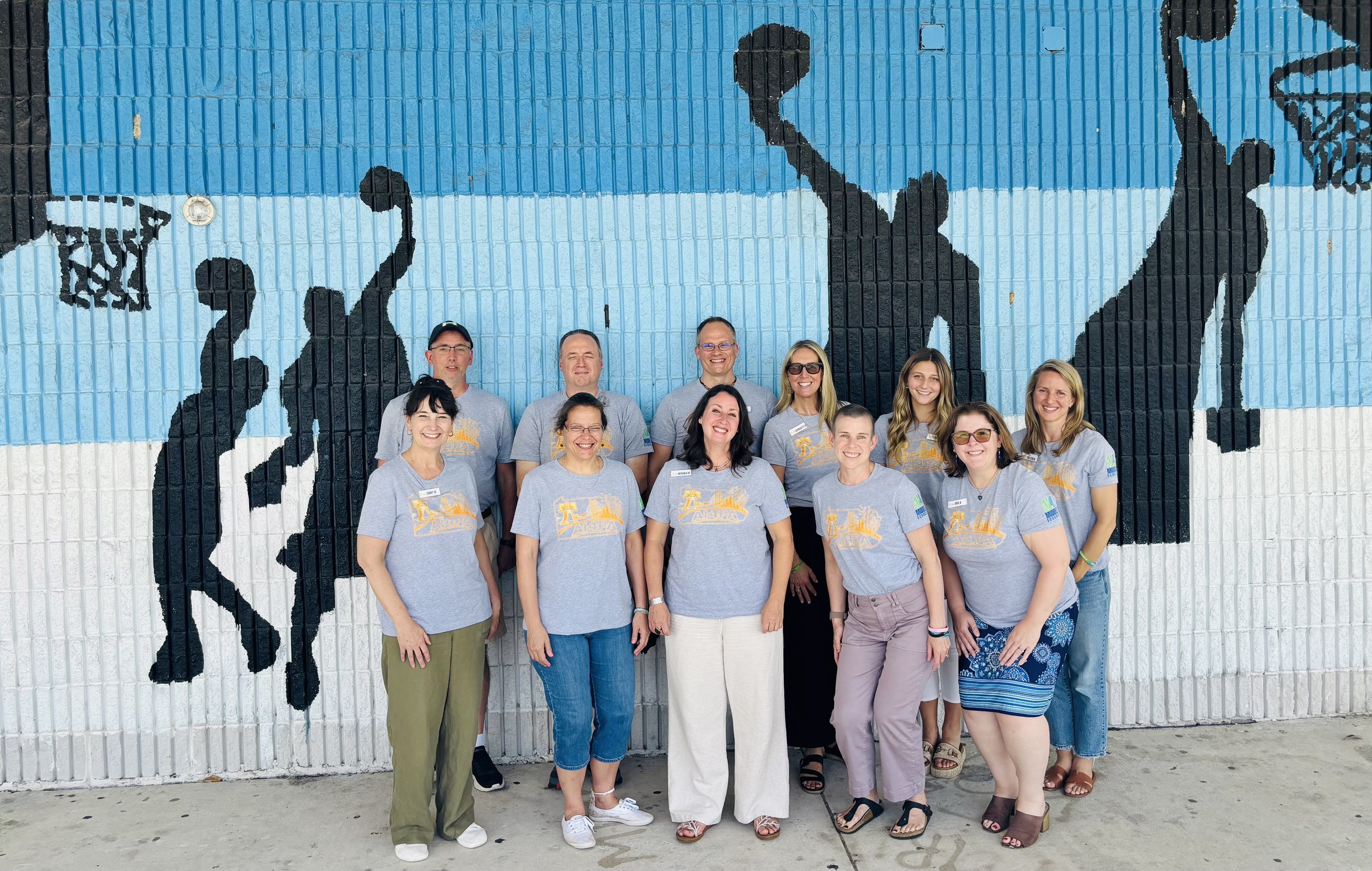
For one week, educators, STEM leaders, and professionals from Pennsylvania, Florida, Georgia, Mississippi, and New Jersey came together to explore one of the most important questions facing our communities today:
How do we prepare the next generation for a world increasingly shaped by artificial intelligence?
As Technology Coordinator for DegenSTEAM in Pennsylvania, the experience placed me in a unique position to observe how educators and professionals from across multiple states are approaching AI literacy. While each state faces its own unique challenges and opportunities, I quickly discovered that many of the questions being asked are remarkably similar.
What skills will students need in an AI-enabled future? How do we teach responsible and ethical use of AI? How do we help people understand artificial intelligence without fear? How do we prepare our communities for technologies that are advancing at an unprecedented pace? And what role should educators, families, businesses, and community organizations play in shaping that future?
Throughout the week, participants explored topics including algorithms, decision trees, machine learning, neural networks, computer vision, large language models, augmented reality, and AI ethics. The sessions were intensive, thoughtful, and designed to help participants understand not only what AI is, but how it works, where it is already being used, and what it means for education, workforce development, and everyday life.
One aspect of the experience that deserves special recognition was the effort of the instructors and facilitators. Artificial intelligence is a complex subject filled with technical concepts that can often feel overwhelming. Yet the instructors did an exceptional job translating those concepts into practical, understandable lessons that educators and community leaders could take back to their schools, organizations, and communities.
Their goal was not to create AI experts in a single week. Their goal was to build understanding, confidence, and literacy so that participants could continue the conversation and help others better understand this rapidly evolving technology.
With more than two decades of experience in information technology, I attended the training with my own questions, concerns, and perspectives about artificial intelligence. What I quickly realized was that many of those thoughts were shared by others from across the country.
Whether someone was from Pennsylvania, Florida, Georgia, Mississippi, or New Jersey, the conversations often centered around the same themes. Communities everywhere are asking how to prepare students for emerging technologies, how to balance innovation with responsibility, and how to ensure that people are equipped with the knowledge necessary to make informed decisions.
What I found most reassuring was that the questions, concerns, and hopes I have about artificial intelligence are not unique to Pennsylvania. Communities across the country are asking many of the same questions and working together to find meaningful solutions.
One of the most important lessons from the training was understanding what AI literacy actually means.
AI literacy does not require someone to like artificial intelligence. It does not require someone to adopt AI tools in every aspect of their life. Instead, AI literacy is about awareness, understanding, and informed decision-making. It is about helping people recognize where AI already exists in their daily lives and equipping them with the knowledge necessary to engage with it thoughtfully and responsibly.
Throughout the week, discussions explored both the opportunities and challenges presented by artificial intelligence. We openly discussed the good, the bad, and the ugly. These conversations were not driven by fear, hype, or emotional reactions. Instead, they focused on constructive dialogue, critical thinking, and understanding the potential impacts of AI on education, work, and society.
As a member of the Pennsylvania team, I often found myself thinking about what we could bring home from this experience. What lessons could we share with our schools and communities? What resources could help students, educators, and families become more informed? What does meaningful AI literacy look like here in Pennsylvania?
While there are no simple answers, the conversations throughout the week provided valuable insights and ideas that can help guide future efforts.
Perhaps the most surprising takeaway from the entire experience had very little to do with artificial intelligence itself.
Throughout the week, one theme surfaced repeatedly: technology is advancing at an extraordinary pace. Everyone feels that pressure. New tools emerge almost daily. Capabilities evolve rapidly. Questions about the future continue to grow.
But while AI was the topic that brought us together, it was not the most valuable thing in the room.
The most valuable thing was people.
It was educators sharing ideas across state lines. It was professionals discussing challenges openly and respectfully. It was organizations collaborating on solutions. It was conversations during breaks, laughter between sessions, and friendships formed through a shared commitment to helping the next generation succeed.
The experience reminded me that while technology will continue to evolve, the human qualities that strengthen communities remain unchanged. Communication, collaboration, empathy, trust, and relationships continue to be the foundation upon which meaningful progress is built.
If we are going to successfully navigate a future shaped by artificial intelligence, we will not do it alone.
We will do it together.
Artificial intelligence can analyze information, identify patterns, and generate responses. It can assist us in remarkable ways. But it cannot replace the genuine human connections that inspire cooperation, creativity, understanding, and purpose. It cannot replace the conversations that build trust or the relationships that create lasting change.
In the end, my greatest takeaway from the AI4MiddleSchools training was not a particular technology, model, or tool.
It was the reassurance that people from different states, different backgrounds, and different professions are coming together to address these challenges collectively. They are sharing ideas, learning from one another, and working toward solutions that will help prepare future generations for an increasingly complex world.
That realization gives me confidence not only in the future of AI literacy, but in the future of our communities as well.
As I returned home to Pennsylvania, I was grateful for the opportunity to learn alongside such passionate educators and professionals. The conversations may have centered around artificial intelligence, but the lesson I brought home was fundamentally human:
The future will not be shaped by technology alone. It will be shaped by people willing to learn, communicate, collaborate, and work together to build a better tomorrow.